
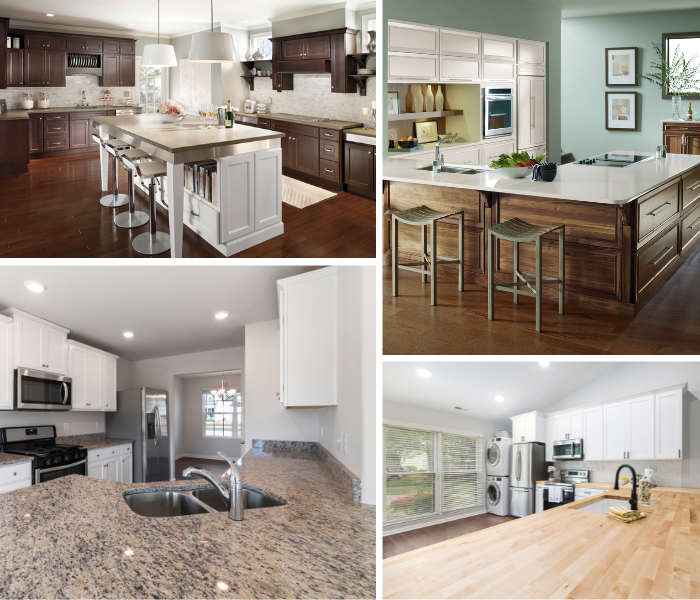
Your countertops are one of the hardest-working surfaces in your kitchen—and one of the most visible. They need to complement your cabinets and flooring, stand up to everyday life, and fit comfortably within your remodeling budget.
With so many attractive choices available, how do you decide? Here’s a look at four popular countertop materials and what you should know about each.
Quartz: Durable and Low Maintenance
Quartz has become a favorite for busy kitchens because it combines good looks with relatively easy care. Unlike natural stone, quartz is engineered, which allows for a wide variety of colors and patterns—including designs that closely resemble marble.
Pros: Durable, nonporous, stain-resistant and available in many styles.
Consider: Quartz is not completely heatproof, so trivets should be used under very hot cookware.
Maintenance: Easy. Regular cleaning with mild soap and water is generally all that’s needed.
Price Point: Moderate to high, depending on brand, color, thickness and design.
Granite: Natural Beauty and Individual Character
Because granite is natural stone, every slab is different. Its variations in color, movement and pattern can make it an especially attractive choice when you want your countertop to become part of the kitchen’s design statement.
Pros: Durable, heat-resistant and available in a wide range of natural patterns.
Consider: Because it is porous, granite can absorb stains if it isn’t properly protected.
Maintenance: Periodic sealing may be recommended.
Price Point: Moderate to high, with unusual colors and patterns generally costing more.
Marble: Classic and Elegant
Few materials have the distinctive look of natural marble. Its veining and soft coloration can create a beautiful, upscale kitchen, but homeowners need to understand that marble requires more care than quartz or granite.
Pros: Timeless appearance and every slab is unique.
Consider: Marble is softer and more porous than many other countertop materials, making it more susceptible to staining, scratching and etching.
Maintenance: Regular sealing and careful cleaning are important.
Price Point: Generally high, particularly for premium varieties.
Butcher Block: Warm and Inviting
Wood countertops bring warmth and texture into a kitchen and can be particularly attractive when combined with painted cabinetry or used on an island as an accent to stone countertops.
Pros: Warm, natural appearance; scratches and wear can often be sanded and refinished.
Consider: Wood can be damaged by water, heat and stains if it is not properly maintained.
Maintenance: Requires periodic oiling or sealing, depending on the finish.
Price Point: Moderate to high depending on the type of wood and construction.
So Which Countertop Is Best?
There isn’t one right answer for every kitchen. A household that cooks every night may value durability and easy maintenance, while another homeowner may put natural beauty and distinctive design first.
At U S Kitchens & Baths, we help homeowners compare countertop materials alongside cabinetry, flooring, backsplash and the other elements of the room. Seeing how these materials work together can make choosing much easier—and help create a kitchen that looks beautiful and works beautifully for your family for years to come.