
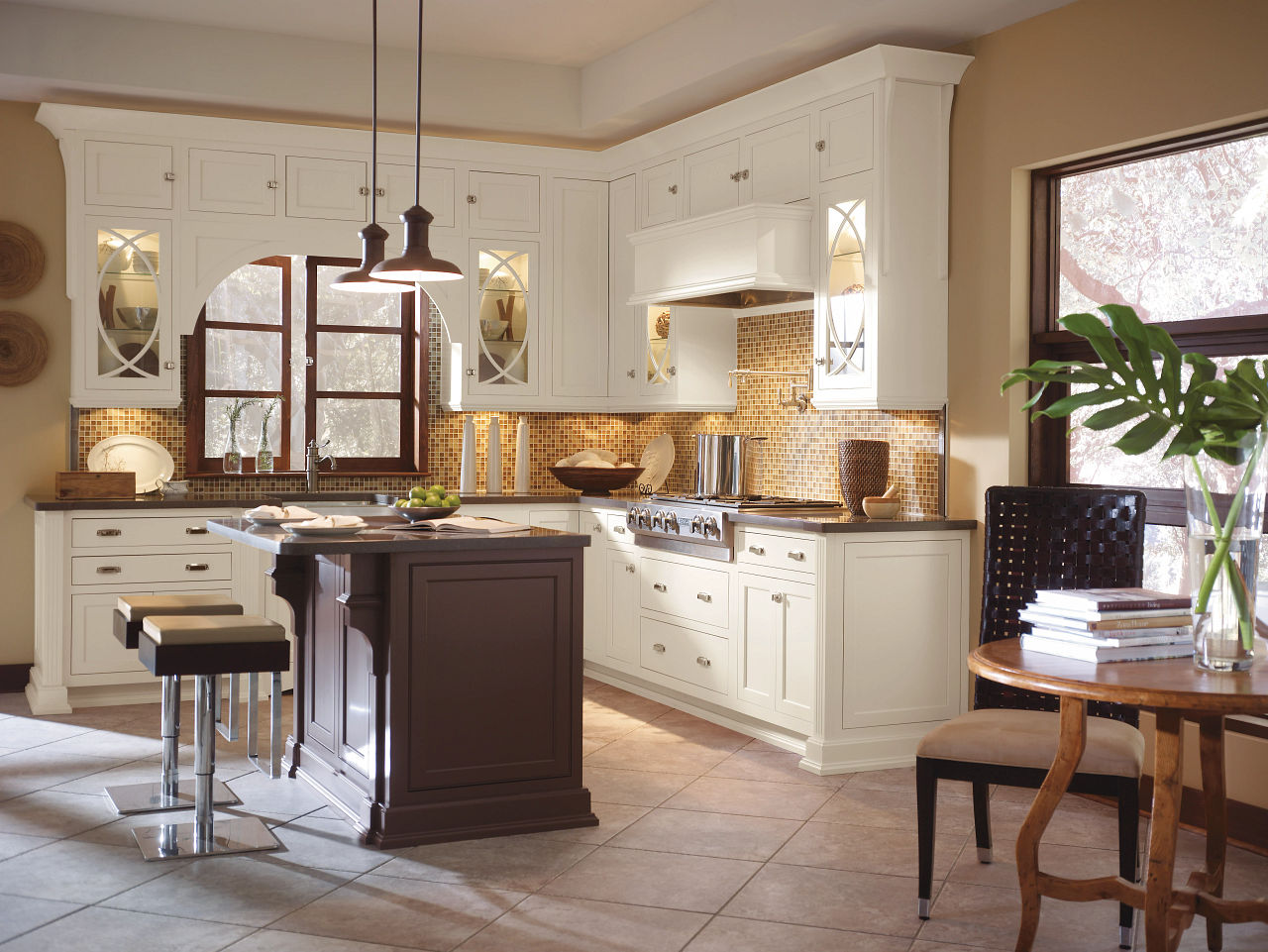
When planning a kitchen remodel, most homeowners naturally focus on cabinet colors, door styles and finishes. However, there is another important decision behind the appearance of your cabinets: Should you choose framed or frameless construction?
Both construction methods can produce attractive, durable and highly functional cabinetry. Neither is automatically better than the other. The best choice depends on the look you prefer, the amount of accessible storage you need, the cabinet line you select and the conditions in your kitchen.
Here is what you should know before deciding.
What Is Framed Cabinetry?
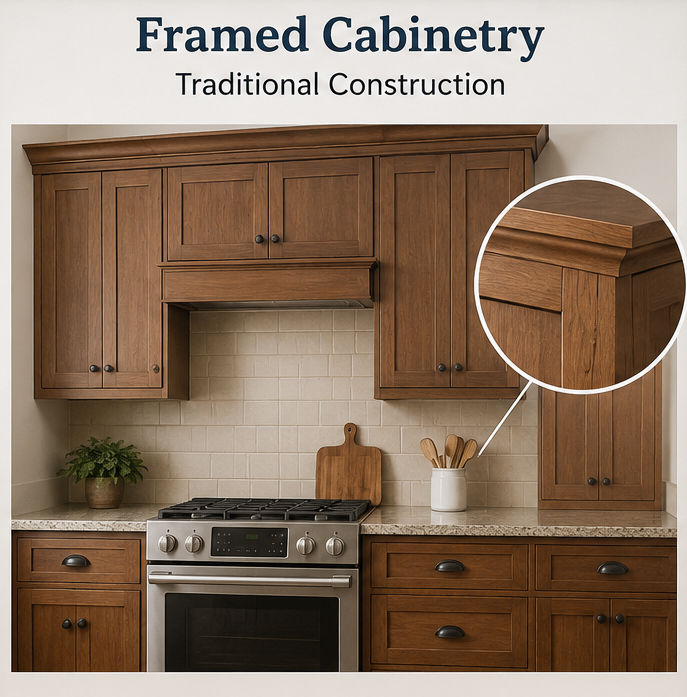
Framed cabinetry—sometimes called face-frame cabinetry—has a structural frame attached to the front of the cabinet box. The horizontal pieces are called rails, while the vertical pieces are known as stiles.
The doors and hinges are generally attached to this frame. This construction method has long been associated with American cabinetmaking and remains a popular choice for traditional, transitional and even some contemporary kitchens.
Framed cabinetry is available with several door configurations:
- Partial overlay: The doors and drawer fronts cover only part of the frame.
- Full overlay: Larger doors and drawer fronts cover most of the frame.
- Inset: The doors and drawers fit inside the face frame and sit flush with it.
Because full-overlay framed cabinets conceal most of the frame, they can create a cleaner, more streamlined appearance than many homeowners expect.
Advantages of Framed Cabinets
One of the primary benefits of framed construction is its design flexibility. Because homeowners can choose from partial-overlay, full-overlay and inset styles, this allows the cabinets to complement homes ranging from classic colonials to updated contemporary spaces.
The face frame also provides rigidity to the front of the cabinet box. Framed cabinets may be somewhat more forgiving during installation, particularly in older homes where walls and floors are not perfectly level or square.
For homeowners who love the refined, furniture-inspired appearance of traditional inset cabinetry, framed construction generally offers the widest range of choices.
Points to Consider with Framed Cabinets
Because the face frame extends slightly into the cabinet opening, it can reduce the width of the usable opening. This may be most noticeable in drawers, pull-out accessories and cabinets used to store wider appliances or serving pieces.
The amount of visible space—or reveal—between doors and drawer fronts can also be greater, depending on the selected overlay. That may matter to homeowners seeking an especially sleek, uninterrupted look.
What Is Frameless or Full-Access Cabinetry?
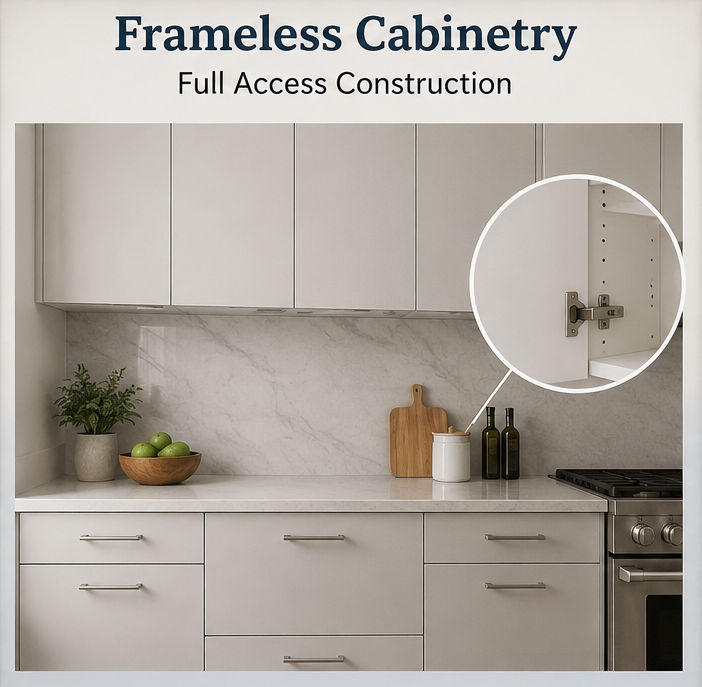
Frameless cabinetry, also called full-access or European-style cabinetry, does not have a face frame attached to the front of the cabinet box. Instead, the doors and hinges attach directly to the cabinet sides.
The cabinet box itself is engineered to provide the necessary support. Because there is no frame extending into the opening, homeowners receive wider access to the cabinet interior.
Frameless cabinets are most often paired with full-overlay doors and narrow, consistent reveals. This creates the crisp, linear appearance frequently seen in modern and urban kitchen design. However, frameless cabinetry is not limited to contemporary kitchens and the right door style and finish can also work beautifully in transitional and updated traditional spaces.
Advantages of Frameless Cabinets
The most noticeable advantage is accessibility. Wider openings make it easier to reach stored items and accommodate larger drawers, pull-outs and organizational accessories.
Frameless construction can provide:
- More usable drawer width
- Easier access to cabinet interiors
- Clean, narrow spacing between doors and drawers
- A streamlined, furniture-like appearance
- A broad selection of materials and finishes
Depending on the manufacturer, frameless cabinet lines may offer extensive choices in textured laminates, high-gloss acrylics, wood veneers, matte finishes and other contemporary materials.
The additional accessibility can be especially valuable in a smaller kitchen, where efficient storage and organization are priorities.
Points to Consider with Frameless Cabinets
Frameless cabinetry requires accurate manufacturing, careful measuring and precise installation. Tight reveals make inconsistencies more noticeable, particularly when floors, ceilings or walls are uneven.
That does not mean frameless cabinetry is less durable. A well-made frameless cabinet can be extremely strong and long-lasting. Quality depends on factors such as the cabinet-box materials, back construction, joinery, hinges, drawer slides, finishes and installation.
Homeowners should evaluate the complete cabinet system rather than assuming that either framed or frameless construction automatically indicates better quality.
How Do You Decide?
Choose framed cabinets when you prefer:
- Traditional inset or partial-overlay styling
- Greater flexibility in door-overlay options
- A more architectural or furniture-inspired appearance
- Construction that may be more adaptable to an older, less-level room
Choose frameless cabinets when you prefer:
- Wider access to cabinet interiors
- Larger usable drawer openings
- Tight, consistent spacing between doors and drawers
- A clean, streamlined appearance
- Contemporary materials and finishes
The decision should not be made from a photograph or product description alone. Visit a kitchen showroom where you can open the doors, compare drawer space, examine the construction and see framed and frameless displays side by side.
At U.S. Kitchens & Baths, we offer over 5000 square feet of showroom with many displays that you can view. Our experienced kitchen designers can explain the differences among cabinet manufacturers and help you select the construction, style and storage features that work best for your home, your needs and your budget.