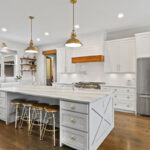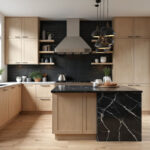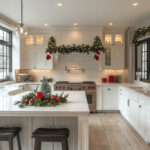
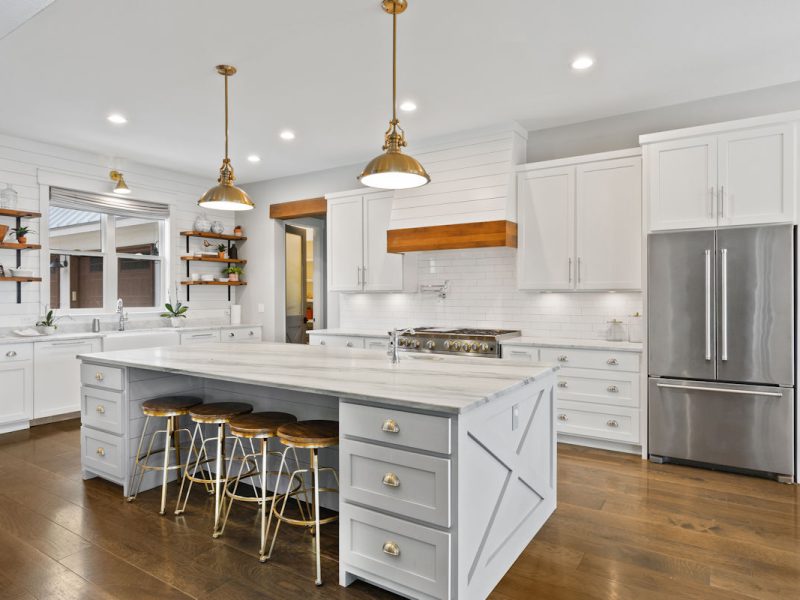
For years, the kitchen island has been considered a must-have feature in kitchen design. But today’s kitchens aren’t just about cooking–we also use them as gathering places, workspaces, and homework hubs–so design choices are evolving to reflect that reality. While islands aren’t disappearing, many kitchens are moving away from large, fixed islands in favor of layouts that feel lighter, more flexible, and better suited to how families really use their space.
Flexible, Furniture-Inspired Design
One of the biggest changes is the rise of freestanding prep and worktables. Unlike traditional built-in islands, these pieces resemble furniture rather than cabinetry. Often finished with wood tops and open shelving, these contemporary worktables add warmth and character while still providing valuable prep space. In some designs, they’re even mobile! This offers a flexibility that a permanent island can’t.
Another increasingly popular alternative is replacing the island with a large central dining table. Instead of separating cooking and dining areas, homeowners are embracing a single shared surface where meals are prepared, eaten, and enjoyed together. This approach creates a more casual, welcoming feel, especially in open-concept homes where the kitchen flows directly into living spaces.
Peninsulas Make a Comeback
For kitchens where space is at a premium, peninsulas are seeing renewed interest. Attached to existing cabinetry, peninsulas offer extra counter space, seating, and storage, just like an island, but without disrupting traffic flow. In narrow or galley kitchens, a peninsula often provides better functionality while maintaining an open feel.
Modular and Mobile Solutions
Flexibility is a defining theme of 2026 kitchen design, which is why rolling carts and modular prep stations are trending. These pieces can be used for food prep, serving, or entertaining, allowing homeowners to adapt their kitchens to different needs throughout the day–and even to be moved out of the way when not in use.
Vintage and Repurposed Pieces
Another notable trend is the use of repurposed furniture, such as antique dressers or console tables, as functional kitchen elements. These pieces add personality and charm while also offering practical storage and workspace. When paired with durable surfaces and thoughtful lighting, they can become a true focal point of the kitchen.
Why the Traditional Island Is Being Reconsidered
The move away from oversized islands isn’t about rejecting them altogether, but instead about intention. Since large islands can dominate a room, restrict movement, and limit flexibility, homeowners are now prioritizing designs that feel more lived-in, adaptable, and tailored to their lifestyle.
That said, islands still have a place when they serve a clear purpose. In larger kitchens, well-designed islands with integrated seating, sinks, or storage continue to be popular. The key difference is that today’s islands are designed with function first, rather than just extra countertop space.
There’s no one-size-fits-all solution. The best kitchen layouts are the ones that reflect how homeowners cook, gather, and live. Whether that means a streamlined peninsula, a furniture-style worktable, or a thoughtfully designed island, the goal is the same: a kitchen that works beautifully, and feels even better.
Ready to get started on your dream kitchen? Come down to our showroom today!